Bean to Bliss — Episode 13: Three Farms, Eleven Days
Eleven days. That is the whole distance between a customs release in San Francisco and a finished bar of 81% dark chocolate. The beans cleared on 14 October. The bar was made on 25 October, by hand, in small batch, by Kirsten at Kiki's Cocoa.
For craft chocolate, eleven days is unusually short. Most bars spend months in transit, in warehousing, in wholesale — before they get anywhere near a melanger. Aromatics are volatile. Cacao butter and cacao solids carry the place they came from in compounds that fade with time and heat, and no amount of craft on the far end puts them back.

Matheus and Gary shake hands at the open back of a loaded van in Ilhéus, 30 September 2026.
Three farms, one corridor, one waybill
The cacao behind this shipment does not come from one place, and it took me a while to get that right. It is three farms, one export corridor in southern Bahia, and a single air waybill.
- Paulo — La do Sitio farm, Pará. Deep in the Amazon basin, north of the Bahia cacao belt. This is the ceremonial cacao, 200g pouches, 169 of them on this flight.
- Oscar — Bahia. A hundred-year-old criollo farm in the Bahia belt. His beans went into the 8oz nibs — 129 pouches.
- Vivi — Fazenda Jesus da Deus, Itacaré, Bahia. Her cacao was grown in Itacaré, then made into bars at Santos' factory in Itabuna. It landed on the same waybill. Forty serialised codes of her 81% bar came out of the batch made on the 25th.
One corridor, really — the Itabuna–Ilhéus circuit in southern Bahia. One air waybill: 047-3175-3223. That is the least romantic and most load-bearing sentence here — a shipment like this lives or dies on whether the paper matches the pallet.
| Product | Beans | Size | Price |
|---|---|---|---|
| Ceremonial Cacao | Pará — Paulo's La do Sitio | 200g | $30 |
| Organic Cacao Nibs | Bahia — Oscar's farm | 8oz | $25 |
| 81% Dark Chocolate Bar | Bahia — Vivi's, Itacaré | 50g | $10 |
The eleven days before that
The eleven days are the fast part. The slow part is everything that came before: 349 kilograms of cacao packed at the Black King warehouse in Ilhéus on 30 September — 27 boxes, two pallets, taped by hand, moved by people.
We filmed that day for five hours. When the clips came back, the honest summary is: almost none of it shows cacao. It shows labour. People carrying boxes down corridors and out to a curb. A hand truck pushed towards the van. A back turned in a doorway. A van at a loading bay. Yellow tape. Styrofoam coolers stacked and sealed. One stretch where the person filming covers the lens by accident.
Exactly one frame in those five hours shows product: a box with the word NIBS printed on the side, lifted into a van. The most honest image in the set, because it is the only one where the label, the load, and the person doing the lifting are all in the same place at the same time.
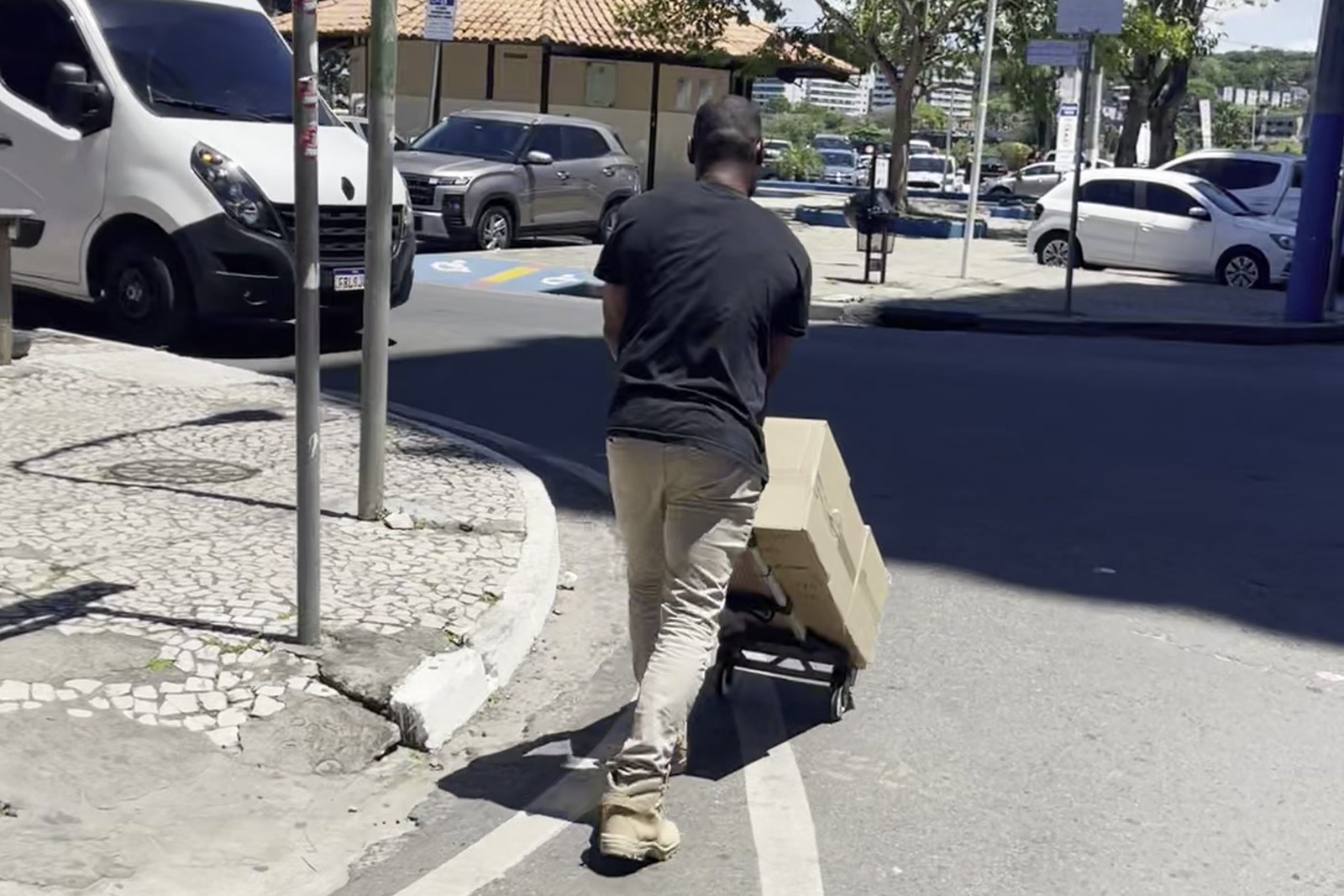
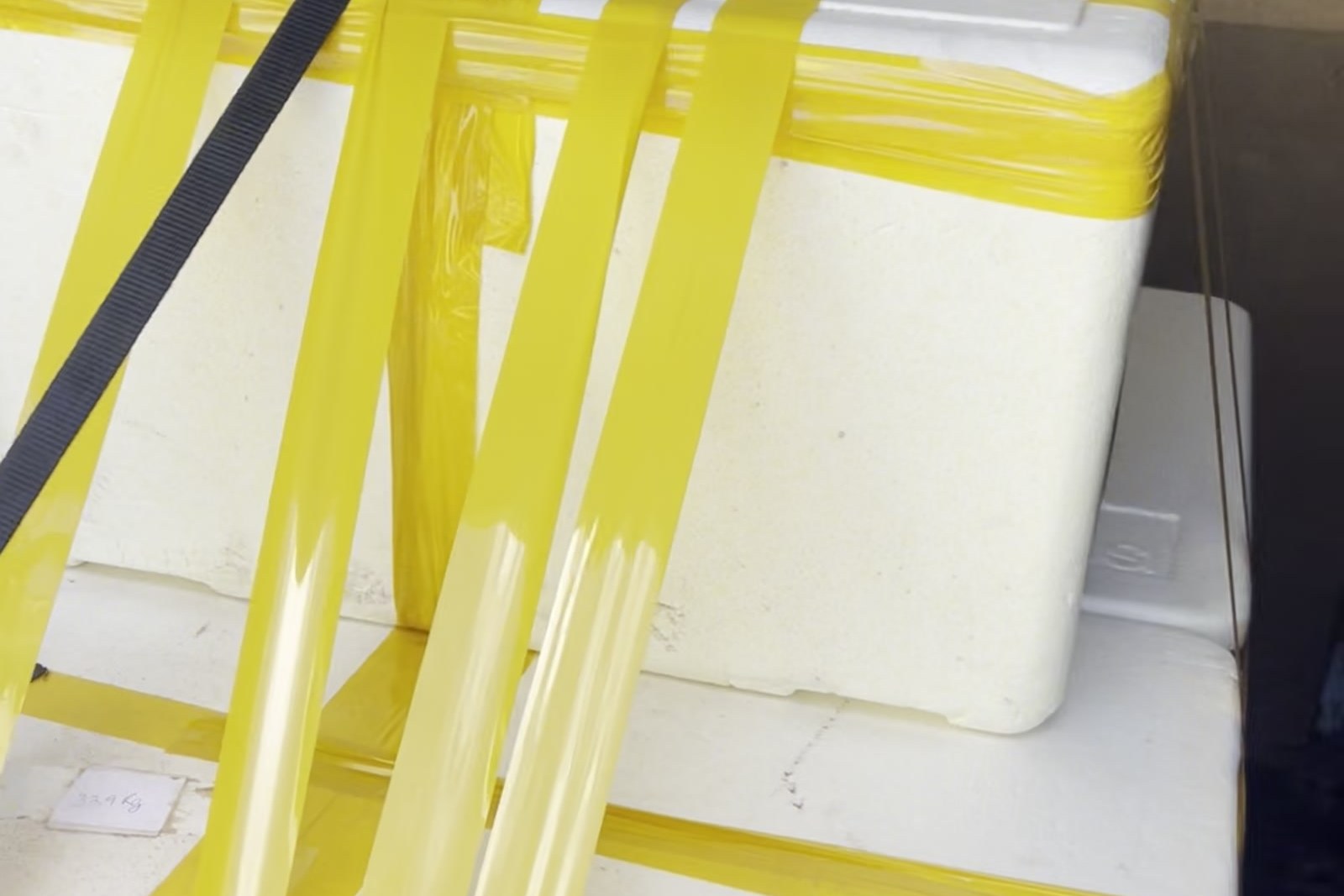
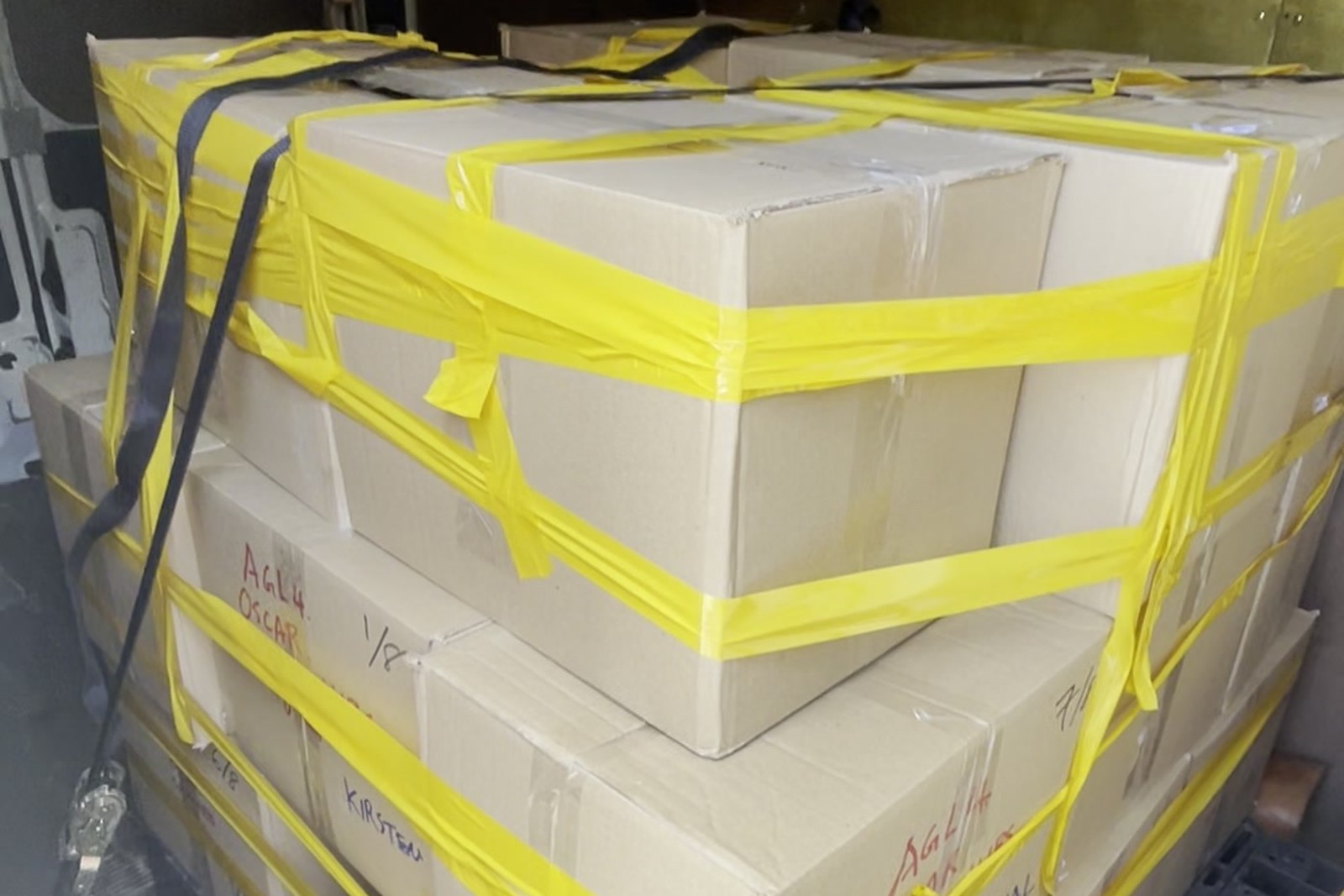
Somewhere inside those boxes are the QR codes. Each bag carries one, and each code points back to a farm, a harvest and a shipment — not as decoration but as the record of the 27 boxes, the two pallets, and the hands that moved them.
Why the eleven days matter
Because the traceability claim and the freshness claim are the same claim. A code that traces a bar back to a farm is worth more when the bar was made eleven days off the plane than when it was made two years later, from beans that had been sitting in a container.
Most of what we publish is about the farm end — the trees, the fermentation, the drying. This one is about the other half: the tape, the pallets, the paperwork, and the eleven days. That is where a harvest becomes something you can actually eat.
Follow a bar
All three are available now: Paulo's ceremonial cacao, Oscar's cacao nibs, and Vivi's 81% bar.
If you buy one, scan the code on the bag. It goes somewhere real — a farm in Pará, or a hundred-year-old grove outside Itacaré, or a warehouse floor in Ilhéus on a Tuesday in September.