Unveiling Cacao Bean Flavor Profiles: Insights from Global Tasting Tools and Brazilian Expertise
Unveiling Cacao Bean Flavor Profiles: Insights from Global Tasting Tools and Brazilian Expertise
The world of cacao is a tapestry of tastes, where each bean holds secrets shaped by nature and nurture. Building on our exploration of cacao varieties, origins, and processing, let's delve deeper into flavor mapping tools that help demystify these complexities. Drawing from innovative resources like the "Taste with Colour" map and Brazilian sensory wheels from the Centro de Inovação do Cacau (CIC), we'll enhance our understanding of how to taste and appreciate cacao's diverse profiles. These visual aids, often used by experts, make the art of chocolate tasting accessible to all.
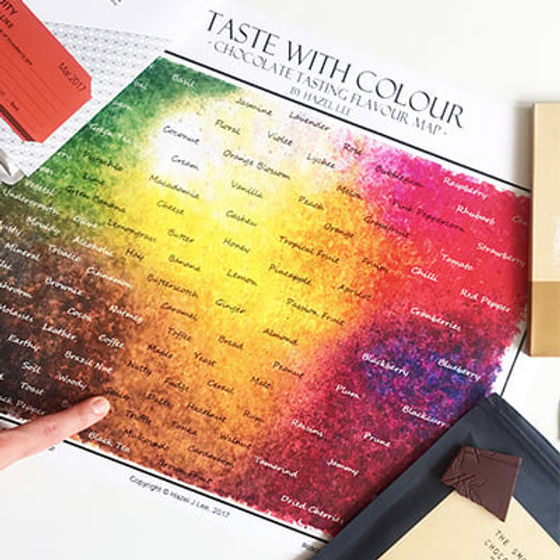
Craft Chocolate Tasting Flavour Map: Taste With Colour
Revisiting Cacao Varieties and Their Core Flavors
As a refresher, the four main cacao types—Forastero, Criollo, Trinitario, and Nacional—lay the foundation for flavor. Forastero brings earthy robustness, Criollo offers delicate florals and fruits, Trinitario blends resilience with complexity, and Nacional delivers bold, ancient notes like jasmine and banana. These genetics interact with terroir to create unique expressions, but tools like flavor wheels help categorize them systematically.
The Role of Terroir and Origin in Flavor Diversity
Terroir remains key: Venezuelan cacao might evoke raisins and spices, while Madagascan beans burst with citrusy brightness. In Brazil, a hub for cacao innovation, the CIC emphasizes how regional factors differentiate sensory characteristics in the final product. Their work highlights Amazonian cacao's profiles, often featuring nutty, fruity, and floral notes from areas like the Eastern Amazon.
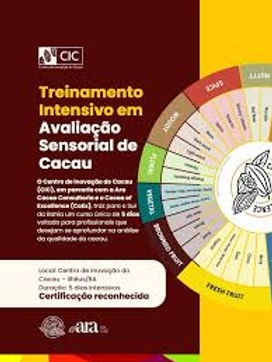
Centro de Inovação do Cacau sensory training poster
Brazilian sensory analysis, as seen in CIC's posters, outlines processes from genotype to molding, ensuring differentiated flavors. Tests include affective (preference), discriminative (triangular comparisons), and descriptive (flavor profiling), all aimed at quality control and innovation.
Processing: The Alchemist's Touch on Flavor
Fermentation, drying, and roasting develop precursors into aromas. Brazilian experts at CIC note that under-fermentation leads to astringency, while proper techniques yield balanced profiles. In competitions like those hosted by CIC, beans are evaluated for these nuances, with records showing excellence in creamy, sweet varieties like Centroamericano H1 from El Salvador—though adaptable to Brazilian contexts.
Flavor Maps and Wheels: Visual Guides to Tasting
Flavor wheels and maps are indispensable for decoding cacao. The "Taste with Colour" by Hazel Lee uses a rainbow spectrum to link colors to tastes, helping tasters identify 111 notes—from green herbal (pine, mint) to red fruity (cherry, red wine) and purple tannic. This synesthetic approach, inspired by Lee's color-flavor associations, makes tasting intuitive and fun.
In Brazil, the "Roda dos Sabores" (Flavor Wheel) by Seguin & Sukha (2015) categorizes into acidity (cítrico, lácteo), bitterness, astringency, sweetness, fresh fruits (bagas, cítricos), brown fruits (ameixa seca), nuts, floral, ripened/rotten fruit, spicy (tabaco), and off-flavors (mofado, fumaça). Another CIC wheel for liquor or chocolate includes floral, fruity, nutty, caramel/toasted, over-fermented, and off-notes, with intensity scales from 0 (absent) to 10 (maximum).

These tools align with global standards, like the Cacao of Excellence wheel, which includes woody, floral, vegetal, fresh fruit, browned fruit, nutty, spice, caramel, sweetness, bitterness, astringency, acidity, roast/cacao, and off-flavors. Recent X discussions echo this, with users noting Robusta's bitterness from chlorogenic acid versus Arabica's fruity acids, paralleling cacao's acid profiles.
Common notes across these:
Fruity: Fresh (citrus, berry, tropical) vs. Browned (raisin, prune, dried cherry).
Nutty/ Earthy: Almond, hazelnut, tobacco, leather.
Floral/ Herbal: Jasmine, rose, green tea, mint.
Spicy/ Woody: Cinnamon, clove, wood, smoke.
Sweet/ Roasted: Caramel, honey, coffee, bread.
Off-Notes: Moldy, overripe, animalic—avoided in premium cacao.
Tasting tip: Use these wheels sequentially—aroma first, then melt on tongue, noting evolution.
Historical Context and Modern Innovations
Cacao's 5,000-year history from Mesoamerica to modern Brazil underscores its evolution. Today, CIC's trainings and competitions foster excellence, with intensive sensory courses in Ilhéus teaching global methods. X users share experiences, like brewed cacao for caffeine-free alternatives or rare beans for euphoric effects.
Sustainability ties in, with hybrids like Centroamericano H1 offering resilient, flavorful options.
Conclusion: Embrace the Spectrum
Incorporating tools like "Taste with Colour" and CIC's wheels transforms cacao tasting into an art form. From Venezuelan spices to Brazilian florals, explore single-estate bars or raw cacao for health benefits like flavanols. Dive in—these profiles await your palate!